
How to Wash Produce: A Guide for Central Kitchens and Food Processing Facilities
Why Produce Washing Is the First Line of Defense in Food Safety
Produce washing pulls dirt, field residue, and harmful bacteria off fruits and vegetables before that product ever reaches a cutting line, a package, or a plate.
For growers, fresh-cut processors, and central kitchens, a reliable commercial produce washing system is the first real checkpoint standing between raw product and a contamination event. Regulators, auditors, and buyers treat this step as mandatory, which is exactly why facilities invest in washing equipment built to deliver the same result on every run.
What Happens When Washing Gets Skipped or Rushed
Rushing product through an undersized or outdated industrial fruit washer leaves contaminants on produce that can look perfectly clean to the eye. That gap rarely shows up at the wash tank. It surfaces later, through a recall, a failed audit, or spoiled inventory that should have never left the facility.
Treating this step as something to speed through costs far more in wasted product and lost contracts than the extra minutes it takes to do it correctly.
The Commercial Produce Washing Process, Step by Step
Knowing how to wash produce at a commercial scale means treating washing as a sequence, not a single action. Each stage targets a different type of contamination, and skipping or shortening one weakens everything that follows it. Below is the order most fresh-cut and food processing facilities follow, starting with raw product intake and ending right before it moves into drying and packaging equipment.
Step 1: Intake and Inspection of Raw Product
Every wash cycle starts before produce touches water. Receiving teams check incoming loads for temperature, physical damage, and visible contamination, sorting out anything that doesn’t meet spec before it reaches the line.
Catching problems here prevents contaminated or damaged product from slowing down equipment further downstream.
Step 2: Pre-Rinsing to Remove Field Debris and Soil
A pre-rinse knocks loose the heaviest soil, mud, and plant matter still clinging to freshly harvested crops. Root vegetables like potatoes and carrots typically need higher water pressure at this stage than leafy greens, which bruise easily under aggressive spray. This step keeps the main wash tank from filling with sediment that would otherwise reduce cleaning efficiency.
Step 3: Primary Wash and Agitation
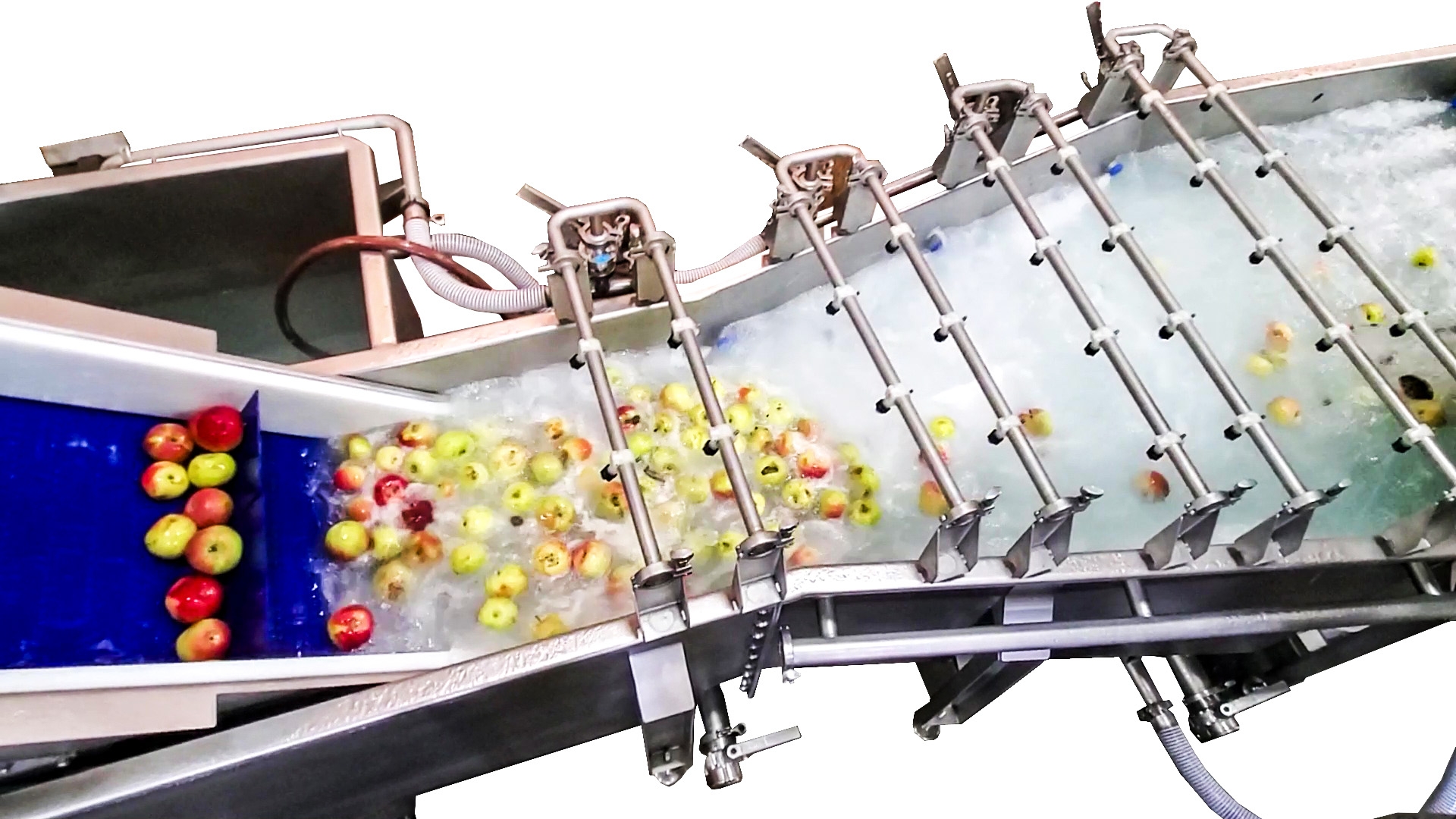
This is where a vegetable washing machine does the heaviest lifting, combining water flow, agitation, and dwell time to loosen and remove dirt, pesticide residue, and surface bacteria.
Facilities running high volumes rely on continuous flow systems that keep produce moving instead of soaking in static water. Getting the agitation intensity right matters here, since too little leaves residue behind and too much damages delicate produce.
Step 4: Sanitizing Rinse for Pathogen Reduction
Once produce is physically clean, a sanitizing rinse targets what agitation and rinsing alone can’t reach at the microbial level.
Chlorine, peracetic acid, and other approved sanitizers are dosed at specific concentrations and contact times to reduce pathogen counts without leaving unsafe residue behind. Getting that balance right is what actually protects a facility during a food safety audit.
Step 5: Moisture Removal Before the Next Line Stage
Wet produce moving straight into packaging or further processing invites mold growth and shortens shelf life fast. Centrifuges, spin dryers, and drying conveyors pull surface moisture off produce immediately after the final rinse, setting it up for whatever comes next on the line.
Choosing the Right Fruit or Vegetable Washing Machine for Your Facility
Not every facility needs the same fruit washing machine or vegetable washing machine, and the wrong choice usually doesn’t show up until months later, as bottlenecks, high water bills, or produce that never comes out as clean as it should. The right equipment matches your produce type, your volume, and the way your line is already laid out. A few direct questions can narrow that decision fast:
- What type of produce are you processing most often? Leafy greens need gentle agitation to avoid bruising, while root vegetables and citrus hold up to more aggressive spray and scrubbing. An industrial fruit washer built for citrus or apples won’t perform the same way on delicate greens, so matching the machine to your primary crop matters more than picking the biggest unit on the market.
- What’s your production volume per shift? A facility washing a few thousand pounds per shift has very different needs than one running tens of thousands. Undersized equipment creates bottlenecks fast, while oversized equipment ties up water, floor space, and capital you don’t need to spend.
- Does the equipment need to integrate with your current line? A standalone commercial fruit washer works well for facilities adding capacity in stages, but continuous operations need a system like a roller wash system, built with modular connections that feed straight into peeling, cutting, or drying equipment without manual handoffs.
- How much are water and labor costs cutting into your margins? Washers with recirculation systems and automated product handling reduce both water use and the labor needed to move product through the wash stage, and those savings compound fast at commercial volume.
Working through these questions before you buy points you toward a vegetable washing machine or fruit washing machine built for your actual operation, not one you’ll be replacing in a year.
How to Choose the Right Industrial Washing Equipment for Your Facility
Selecting the right industrial food processing equipment for washing starts with understanding your operation’s specific demands. Before contacting a manufacturer, work through these key questions to ensure you get the parts and pieces that work best for your business:
- What types of produce are you processing? Leafy greens require gentle agitation to avoid bruising, while root vegetables like potatoes and carrots need aggressive scrubbing to remove caked-on soil. The produce you handle determines the wash method, water pressure settings, and tank configuration your facility needs.
- What is your volume per shift? A facility running 5,000 pounds per shift has very different capacity requirements than one running 50,000 pounds per shift. Matching washer throughput to your actual production targets prevents bottlenecks and avoids overspending on equipment you won’t fully utilize.
- How important is water usage to your operating budget? Some industrial washers feature recirculation systems that significantly reduce water consumption over time. If water costs are a major line item for your facility, prioritizing recirculation capability can deliver measurable long-term savings.
- Does the system need to integrate with your existing line? A standalone washer works well for facilities adding capacity in stages. But if your operation runs a continuous processing line, you need equipment built with modular connections that feed directly into the next stage without manual product transfers.
Answering these questions upfront narrows your options fast and helps you invest in a washing system that actually fits your production workflow, not one you will need to replace in two years.
What Comes After Washing: Drying and Moving Produce Down the Line
Clean produce that stays wet too long is still a liability. Surface moisture left behind after the final rinse invites bacterial growth, shortens shelf life, and can ruin packaging before it ever reaches a customer.
A spin dryer and basket centrifuge pull that moisture off fast, while a drying conveyor keeps product moving straight into packaging or the next processing step without manual handling. Washing only pays off if what happens next protects it.
When a Standard Commercial Fruit Washer Isn't Enough
Not every operation fits a standard model. Unusual produce shapes, mixed product lines, tight facility footprints, or throughput targets that don’t match anything off the shelf all call for something built to spec.
When a standard commercial fruit washer can’t meet those conditions, custom equipment built around your actual floor plan and production goals closes the gap, without forcing your process to bend around a machine that was never built for it.
Ready to Upgrade Your Produce Washing Line?
Washing is where clean, safe, line-ready produce starts, and every step after it only works as well as that first stage. Getting intake, pre-rinsing, agitation, sanitizing, and drying right protects product, protects compliance, and protects the bottom line. If your current setup is falling short at any one of those steps, North Star’s team can help you figure out what a better fit looks like for your facility.
FAQs About Fruit and Vegetable Washing Machines
Do commercial fruit and vegetable washing machines meet FDA Produce Safety Rule (FSMA) requirements?
Yes, when built and operated correctly. The equipment itself doesn’t guarantee compliance, but stainless steel construction, proper sanitation cycles, and consistent water quality controls all support the standards FSMA requires.
What is the throughput capacity of a typical industrial vegetable washing machine, measured in pounds per hour?
Throughput varies widely by machine size and produce type, ranging from a few thousand pounds per hour on smaller units to tens of thousands on high-volume systems. Your facility’s actual output depends on the specific model and configuration.
How do I sanitize a commercial produce washing machine between production runs?
Drain and rinse the system to clear organic debris, then apply an approved sanitizer at the correct concentration and contact time before a final rinse. Most manufacturers provide a specific CIP (clean-in-place) protocol for their equipment.